

By Stephanie Clough
May 26, 2026
You’ve probably heard someone claim that a piece of antique furniture is “handmade, not like that machine-made 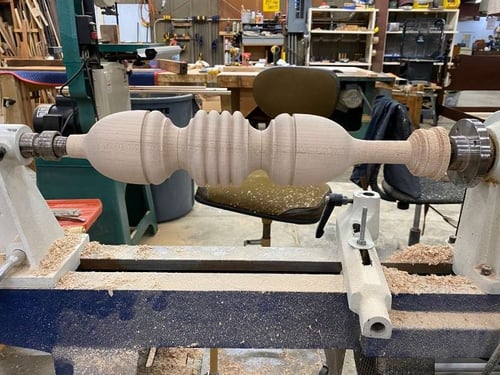 trash they have today.”
Many people don't realize that “antique” doesn’t always mean handmade. Thanks to the Industrial Revolution, factories were mass producing furniture by the mid 1800s.
But hand-crafted furniture was still being produced!
Even some machine-made furniture still had handmade elements.
Understanding the difference can help you:
-
Understand the history of your antique furniture
-
Make informed restoration and preservation decisions
-
Recognize what features contribute to high quality (and occasionally market value)
At Mumford Restoration, we examine construction details every day to understand how a piece was made and how it should be treated.
Above: Our carpenter handmade this piece on a lathe.
Handmade Furniture versus Machine-Made Furniture
When someone says “handmade furniture” they typically mean that the furniture was designed by a skilled 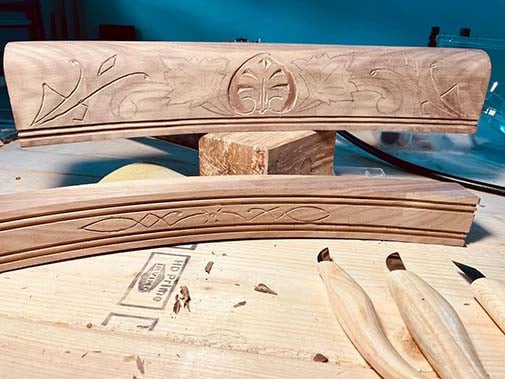 craftsman who created all of the pieces with typical hand-held woodworking tools. They assume no machinery was involved at all. Sometimes that assumption is correct.
Even after the Industrial Revolution, many independent craftspeople continued to work without any machinery.
However, "machine-made" pieces often have a secret: they aren't 100% machine-made. Many factories still employed craftsmen for specialized elements, such as carvings that 19th-century machines were not yet capable of.
Above: This hand-carved piece is a copy of an the carvings on a set of antique chairs.
What Does “Handmade” Mean in Antique Furniture?
The term "handmade" has a narrow definition, but it gives rise to many assumptions!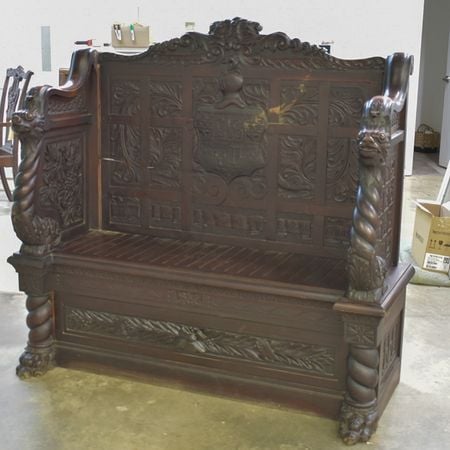
Handmade furniture generally refers to:
-
individualized construction
-
traditional techniques for joinery, carving, planing, etc
You should not assume that "handmade" furniture is automatically:
-
valuable
-
better constructed
For example, an antique worktable might have been handmade, but its maker might have used cheap lumber, cut the wood roughly, and assembled it quickly and simply. It was meant to be functional, not sophisticated or beautiful.
Meanwhile, a mass produced parlor set could have used fine woods and well engineered joinery.
Every piece of antique furniture has to be evaluated on its individual characteristics.
Furniture quality depends on:
-
materials
-
design
-
craftsmanship
-
condition
Keep in mind that the significance of “handmade” versus “machine-made” antique furniture ultimately depends on what the buyer or owner values.
How Can You Tell if Antique Furniture Is Handmade?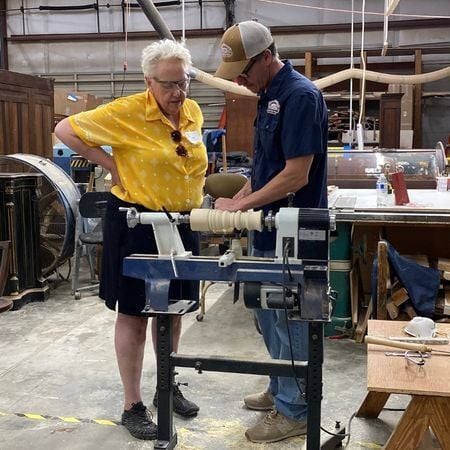
The best way to determine whether furniture is handmade is to look closely at its construction details.
Key indicators include:
-
variation in joinery, such as dovetails that are slightly different sizes
-
irregular tool marks, such as evidence of chisels and planes
-
slight asymmetry in turnings and carvings
Bernard Mumford notes, “You can tell when something is hand made by the non uniformity. You see that the turning on this leg is slightly different than the turning on that leg. That makes everybody excited that it’s hand made. Now, that doesn’t automatically equate to high quality. We’re just looking for differences to recognize how (and potentially where or when) the piece was made.”
Handmade furniture often shows subtle inconsistencies that reflect the use of hand-tools, as opposed to smooth regular machine construction.
Above: Our carpenter demonstrates lathe usage to an attendee at our Mid-Century Modern Night Showcase in April 2026.
Are Dovetail Joints a Sign of Handmade Furniture?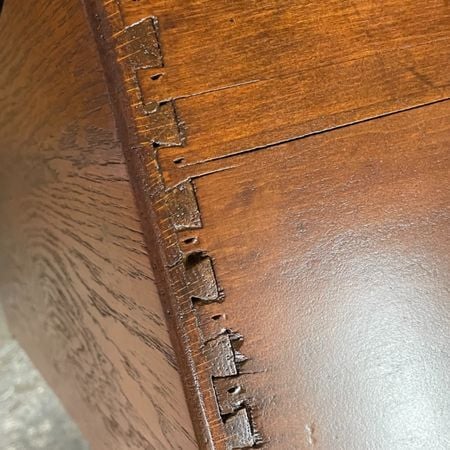
Yes, dovetail joints can indicate handmade furniture if the dovetails show variation.
Hand-cut dovetails typically vary in size and spacing and generally don’t appear uniform.
Machine-cut dovetails, by contrast:
-
are evenly spaced
-
identical in size
-
highly uniform, overall
Many antique drawers feature dovetails, but the spacing and uniform shape (or lack thereof) of the dovetails tells you whether the work was done by hand or machine.
Above: Dovetails like this help furniture to last for decades or centuries.
What Tool Marks Indicate Hand Craftsmanship?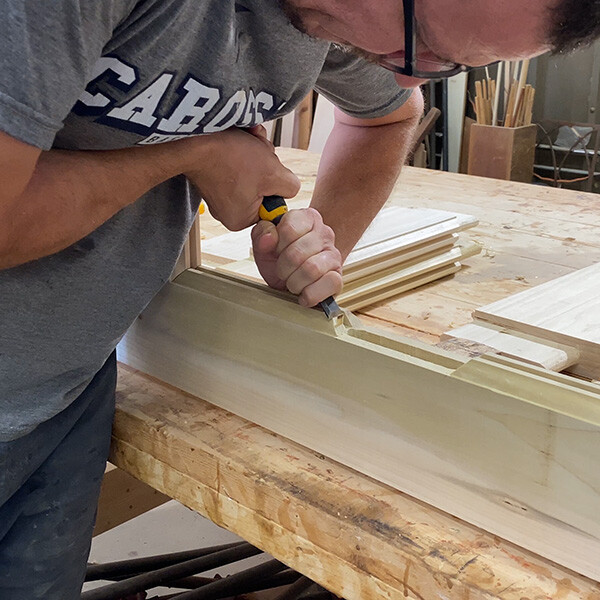
Handmade furniture often shows evidence of hand tools.
Look for:
-
plane marks (slight ripples in the wood surface where the craftsperson used a tool to even out the wood and shape it)
-
chisel marks in joints or recesses (where the craftsman chipped away at wood to create hollows such as mortises)
-
saw marks that are not perfectly straight or uniform
-
hand-shaped edges or contours
These marks are often found in less visible areas, such as:
-
the underside of tables
-
the backs of pieces
-
the interior of drawers
Machine-made furniture tends to have smoother, more uniform surfaces.
Above: For millennia, carpenters have used chisels and planes to shape their projects.
Does Perfect Symmetry Mean Furniture Is Machine-Made?
Perfect symmetry can mean furniture is machine-made, but be sure to look very closely! There were (and still are) experienced craftspeople who can make pieces that are very well balanced and almost perfectly symmetrical!
Handmade furniture has variations, especially in joinery, carving, and repeated decorative elements so pay particular attention to certain features:
-
Repeated elements, such as dovetails
-
Are they spaced at exact, uniform intervals?
-
Are they all the same size?
-
Carved or turned details:
-
Are carved designs or turned spindles perfectly symmetrical?
-
If they are repeated, are they all exactly the same?
-
Do pairs of carvings or turnings line up perfectly across from each other? Or is there a tiny misalignment?
Machine production introduced a level of precision that eliminated these inconsistencies.
If a piece’s carvings (and other repeated or paired elements) appear perfectly identical on both sides, with no variation in carving or spacing, it was likely machine-made or heavily machine-assisted.
However, a craftsperson with decades of experience may have been able to achieve excellent symmetry that is difficult for the average person to discern. If you have questions, find a reputable antique furniture appraiser.
Are Carvings a Sign of Handmade Furniture?
No, carvings do not automatically indicate that antique furniture is handmade. Carvings existed in both handmade 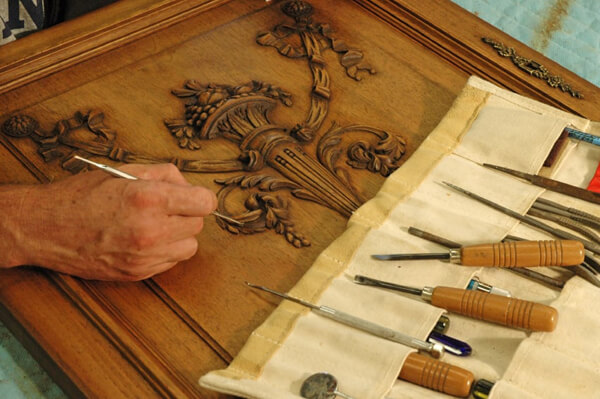 and machine-made furniture.
As we stated above, hand-carved elements usually are characterized by asymmetry and other variations.
Meanwhile, machine-made carvings were highly uniform and repeated at exact intervals.
And remember: some furniture manufacturers hired artisans to hand carve details into machine-made furniture.
Moreover, a carving may not be carved into the wood of the furniture at all! Many factories produced carved elements separately and then attached them to furniture.
Above: Does machine-made furniture have handmade carvings? It depends on the era and how sophisticated furniture making machinery was at the time. An appraiser or antique restoration expert can tell you for sure.
Is Older Furniture Always Handmade?
No, you can’t assume that “older” furniture is handmade.
Age alone cannot confirm that antique furniture is handmade, but it can help narrow the possibilities.
If the furniture was made before the mid-19th century, it was almost certainly handmade.
If a piece was made during or after the 1850s, it requires closer examination to determine whether it was handmade or machine-made.
Why Does It Matter if Furniture Is Handmade?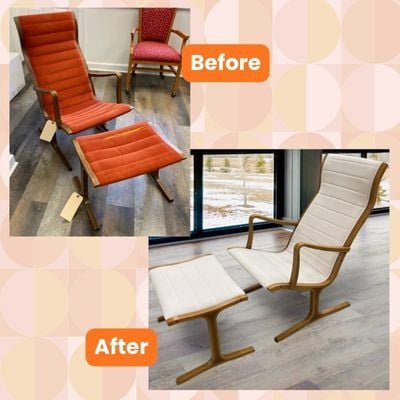
The importance of antique furniture being “handmade” really depends on who is looking at it and what their sensibilities are!
Are you a collector who is on the hunt for rare, elaborate pieces made by master-craftsmen? Then, yes, “handmade” matters.
Do you simply love the style of Eastlake furniture, whether it came from a small workshop or a factory? Then, no, “handmade” doesn’t matter.
Was your beloved family heirloom made in a factory in 1893? Then, no, “handmade” doesn’t matter.
Above: In many cases, prized mid-century modern furniture was produced in a factory, so collectors do not care about the handmade distinction.
How Does Construction Affect Restoration?
Antique furniture restoration seeks to use historically appropriate materials and methods based on how the piece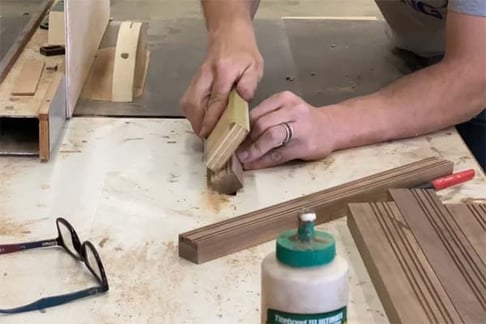 was originally constructed.
Handmade antique furniture often:
-
uses traditional construction techniques
-
relies on reversible adhesives like hide glue
-
does not have uniform parts
If a handmade antique is rare or museum-worthy, an antique restorer would need to use hide glue and measure each individual mortise, tenon, carving, etc to make repairs and replicas (because pieces *look* similar but are slightly different).
Misunderstanding construction can lead to inappropriate repairs and loss of original material.
Above: Modern carpenter's glue, visible in the foreground, is only appropriate for modern pieces (or for antiques used for function, rather than collectability)
When Should You Have Antique Furniture Evaluated?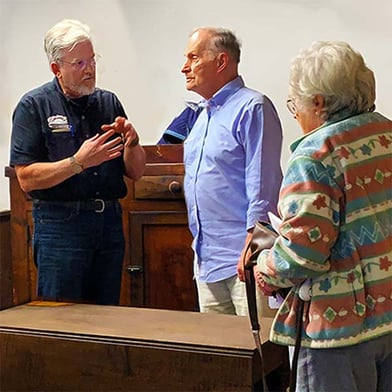
Professional evaluation is helpful when:
-
you want to sell the piece
-
the furniture requires repair or restoration
-
the piece may be valuable or historically significant
-
the piece has sentimental value to you or a loved one
A trained restorer can identify construction methods and recommend the best way to preserve or restore the piece.
Above: Antique restoration professionals like Bernard Mumford can evaluate your antique furniture, discuss your goals, and help you find the best restoration or preservation option.
Professional Antique Furniture Evaluation in Raleigh, NC
At Mumford Restoration in Raleigh, NC, we regularly evaluate antique furniture to understand how it was 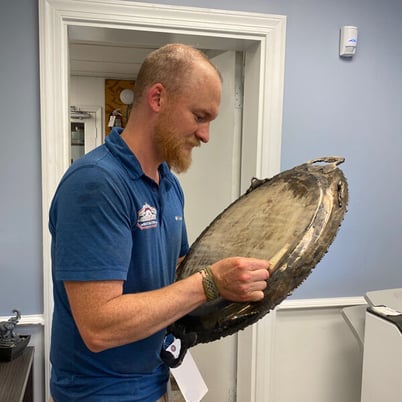 constructed and how we can best preserve or restore it.
Our goal is to:
-
preserve original craftsmanship
-
use appropriate repair methods
-
avoid unnecessary intervention
If you’re unsure how your piece was made, it’s best to avoid assumptions, especially before attempting to repair or clean your antique yourself.
Need help identifying whether your antique furniture is handmade or determining how best to care for it?
Our team is happy to help!
Call us at 919-510-6310 or submit photos through our online form to learn more or schedule an evaluation!