

Restoration ,
Antique Furniture ,
Water Damage ,
Flood Damage ,
Fire Damage ,
Disaster Restoration ,
Repair ,
Refinish
By Stephanie Clough
Mar 03, 2026
Humidity and temperature fluctuations are common causes of damage in antique furniture. 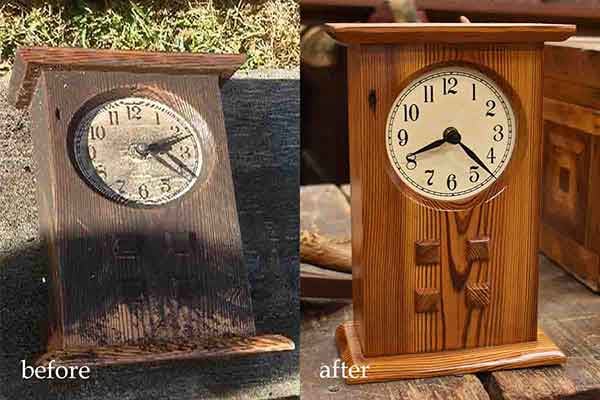
In fact, these environmental stresses are among the most frequent problems identified during professional furniture evaluations.
Changes in moisture levels make wood expand and contract, which stresses joinery, cracks finishes, and weakens adhesives.
Understanding how climate affects antiques helps owners prevent deterioration and recognize when professional restoration may be necessary.
Why Humidity Changes Are Dangerous for Antique Furniture
Wood naturally expands in high humidity and contracts in dry conditions, creating stress that can damage antique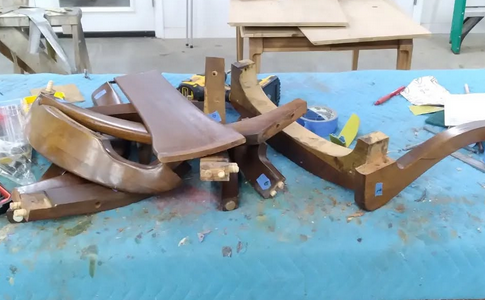 furniture over time.
Moisture content affects the appearance and structure of your furniture.
Bernard Mumford, founder and owner of Mumford Restoration, has seen what happens when furniture isn’t in a climate-controlled environment.
Mumford explains, “You have to maintain a stable temperature and humidity. If you don't, you might move a piece of furniture and find that all of the joints are loose. And you think ‘The moving company did that!’ Well, no. The temperature and humidity extremes caused the glue to come to the end of its life.”
Without a moderate, stable temperature and relative humidity level, your furniture’s lifespan can be dramatically reduced.
In this guide, you’ll learn how to reduce environmental stress on your furniture and prevent wood movement and damage.
What Happens to Wood When Air Gets Too Dry
Low humidity pulls moisture from wood, causing shrinkage that may lead to cracks, joint separation, and veneer 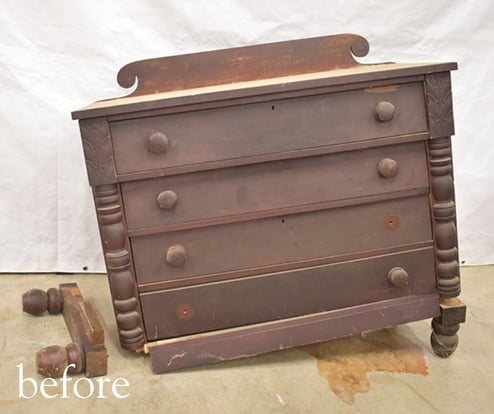 failure.
If you live in a very arid climate such as the Southwest, furniture may lose moisture dramatically if it isn’t kept in a climate- controlled house. This degradation will become especially notable in the case of furniture kept in outbuildings or attics, which become very hot and dry.
This issue is not limited to desert climates! Have you ever noticed cracks, open joints, or splitting in furniture that you keep in your climate-controlled home?
Take a look around the piece of furniture. Is it near a radiator or a vent? This consistent heat can do the same thing as a hot attic. The warm air pulls moisture from within the wood and weakens the structure.
.jpg?width=480&height=402&name=AFTER%20Antique%20buffet%20-%20chest%20of%20drawers-%20furniture%20repair%20and%20restoration-%20raleigh%2c%20nc(1).jpg) Ironically, furniture that survives a flood is frequently a victim of over-drying later on! The fire and water damage company has to place drying equipment in the house to thoroughly dry the structure. This process extracts water from the furniture’s wood too quickly and causes typical drying damage.
Ironically, furniture that survives a flood is frequently a victim of over-drying later on! The fire and water damage company has to place drying equipment in the house to thoroughly dry the structure. This process extracts water from the furniture’s wood too quickly and causes typical drying damage.
Bernard Mumford observes, “ If you have a water event in your house, our recommendation is to place your furniture in a dry, climate-controlled environment while the mitigation company extracts moisture from the house. They are serious about extracting moisture and getting it out of the walls very, very quickly!”
It may be tempting to leave a piece of extremely heavy furniture in the house during this house-drying process.
Mumford encourages clients to move all furniture into a storage area that offers both airflow and a steady climate. “It’s not necessarily destructive for a piece of furniture to get wet, but it can be majorly destructive when it’s dried out too fast. Don’t leave it in the house where it will dry out or put it into a pod where it will stay wet and mold.”
Severely dried furniture does not return to its original dimensions without professional intervention.
In the case of separated joints, a restoration expert will need to disassemble the piece, examine its joints and make adjustments where necessary, and reassemble it.
If your piece has cracked or split, a restorer will first stabilize the piece. Then, depending on the site of the damage, the restorer will either fill the crack with strong wood epoxy or insert a splint of wood into the crack.
What Happens When Humidity Is Too High
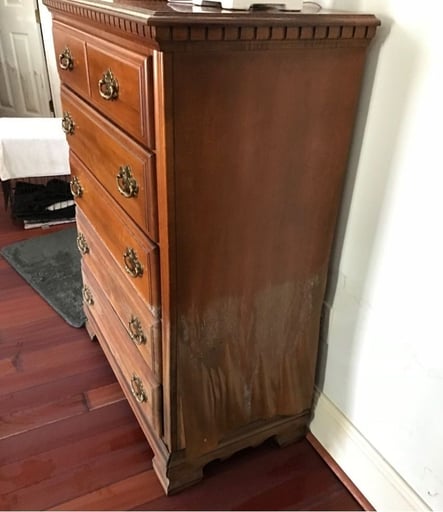 Excess humidity allows wood to absorb moisture, which can cause swelling, warping, and weakening of historic glues.
Humidity is an especially common problem for wood furniture owners in coastal areas.
Signs Your Antique Furniture Is Reacting to Humidity:
-
Loose joints
-
Warping veneers
-
Sticking drawers or doors
-
Mold or mildew
When wood swells, it physically forces its joints apart. The mortises and tenons just don’t fit tightly anymore and sometimes the tenons have been completely pushed out of the mortises.
Swollen wood fibers can also prevent drawers from sliding smoothly and will make doors slightly too large to close easily.
Mold or mildew is the most obvious indicator that you have a humidity problem.
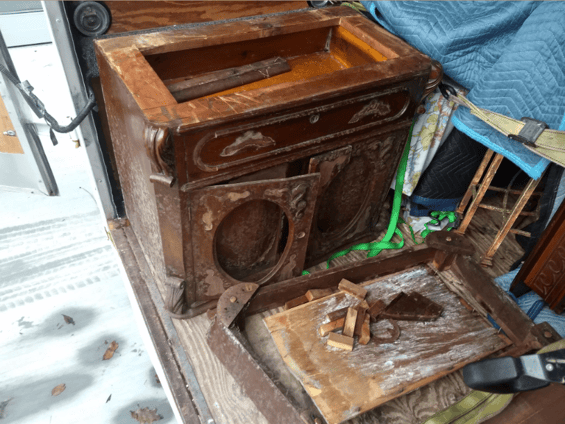
Like heat-related damage, humidity-related damage can permanently distort the wood and will require a restoration expert’s intervention.
Once distortion occurs, stabilization is usually required before cosmetic work can begin.
A restorer will disassemble the piece, reshape the mortises and tenons until they fit snugly again, and reglue the piece.
If the veneer has warped, the restorer will decide whether they can smooth the veneer and reglue it or if the damage requires completely new veneer.
For “sticky” drawers and doors, a restorer may be able to simply sand down the edges until these pieces work smoothly again.
If your furniture does not have a delicate or historic finish such as French polish, a mild vinegar-and-water solution may remove surface mildew.
Bernard Mumford notes, “Simply cleaning mildew from furniture does not correct the problem in the home. We saw a symptom, but not the cause. You have to find out why moisture is collecting and figure out where you need more air circulation and humidity control.”
Mumford advises homeowners to be especially alert to the color of the mold or mildew. If the mold is black, it poses a serious health risk. You will need to call a professional mold remediation company that can treat your home.
If you don’t feel comfortable treating your furniture for mildew or notice that your furniture has a stubborn, musty smell, consult a restoration expert. They know how to clean mold and mildew off of wooden furniture without damaging the finish and can use special equipment to remove smells.
Why Veneer and Glue Fail with Climate Swings
Repeated expansion and contraction can fatigue adhesives, allowing veneer to lift or separate from its base.
As the veneer and its substrate swell and shrink, the force of their movement becomes stronger than the bond of the glue. Large sections can delaminate (separate) or small areas can warp and appear wavy.
Veneer can work its way loose even in a climate-controlled environment if your furniture spends too much time in direct sunlight. To learn more, read our article on sunlight and UV damage
How Temperature Changes Make the Problem Worse
.png?width=482&height=404&name=humidor%20FB%202%20(1).png)
Rapid temperature shifts often intensify moisture changes, accelerating stress on joints, finishes, and veneers.
Your furniture doesn’t like sudden changes or instability!
Some seasonal movement can occur, as houses are not airtight. If this seasonal movement becomes more noticeable, professional assessment can help prevent permanent damage.
You may be tempted to turn your thermostat off when you go on vacation. You reason, "I'll just turn it back on when you get back home next week!
You’ve eliminated climate control.
After you turn the heat off, the home’s temperature will change 30-40 degrees in the case of insulated homes. For older homes with little insulation, it can quickly reach the same temperature as outdoors.
That rapid temperature fluctuation can cause all of the issues related to dry air and humidity.
When you get back home, you may have to contend with damaged furniture.
What Is the Ideal Humidity for Antiques?
.png?width=508&height=426&name=humidor%20FB%202%20(2).png)
Most antiques perform best in a stable environment where relative humidity remains consistent rather than fluctuating dramatically.
Relative humidity is measured as a percentage of water in the air, where 100% humidity is when condensation occurs.
Most homes are between 30%-60% relative humidity.
Bernard Mumford recommends keeping your home’s humidity between 45%-55% to best protect your furniture.
Whatever relative humidity you prefer in your home, just keep it consistent to protect your antiques and furniture.
How to Protect Antique Furniture from Climate Damage
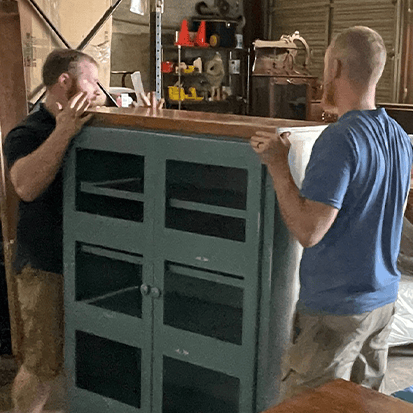
Preventive strategies focus on stabilizing the environment and avoiding locations where temperature and humidity change rapidly.
You can certainly use a humidifier or dehumidifier in rooms whose temperature and humidity vary. Just be sure not to put this machinery too close to the furniture, as they might worsen the issues you are trying to solve!
When you arrange your furniture, try to keep wood pieces away from vents, to prevent temperature fluctuations.
Placing your furniture against an interior wall will also better protect it from temperature swings.
And remember to keep your furniture out of direct sunlight to protect the finish as well as the structural integrity of the wood.
When to Call a Professional Furniture Restorer
A restoration expert can determine whether climate damage requires conservation, repair, or refinishing.
They have seen temperature and humidity damage many times and can help you make a repair plan.
They can also help you find strategies to protect your furniture from future damage.
PROFESSIONAL HELP FOR CLIMATE-DAMAGED ANTIQUES
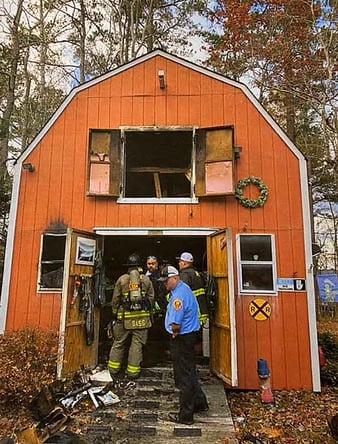 Damage from humidity and temperature changes often develops slowly, but the structural effects can become serious if ignored. Early evaluation can prevent minor movement from turning into major repairs.
At Mumford Restoration, we regularly help owners stabilize antiques, preserve original materials, and choose treatments that protect both function and long-term value.
Have a piece of furniture that has suffered humidity or temperature damage? Call our restoration experts today to learn how Mumford Restoration can help you get your antique furniture back to its old self.
Call us at 919-510-6310 or click the button below to submit photos, ask questions, or request an evaluation today.