

Restoration ,
Antique Furniture ,
Preservation ,
Furniture Style ,
Furniture Value ,
Furniture History
By Stephanie Clough
Mar 16, 2026
What Is Victorian Furniture?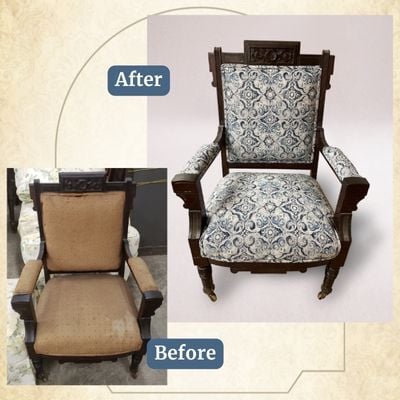
Victorian furniture is often used as a catch-all term for ornate nineteenth-century furniture. In reality, “Victorian furniture” simply refers to ANY furniture made during the Victorian era (1837-1901). It is not a single design style.
During the Victorian era, many different furniture styles flourished, including Rococo Revival, Gothic Revival, Eastlake, Queen Anne Revival, and Arts and Crafts.
Some furniture of the era even combines styles, which makes certain pieces a bit more challenging to categorize!
 Mumford Restoration’s experts have repaired, restored, refinished, and preserved countless pieces of Victorian-era furniture since our founding in 1982.
We wanted to share our knowledge and experience with you, so we have created this guide to:
-
Explain some of the most popular styles within the Victorian era
-
Help owners identify antique furniture
-
Ensure that furniture owners understand their furniture’s historical context and market value.
Above,Right: A refinished & reupholstered Eastlake armchair.
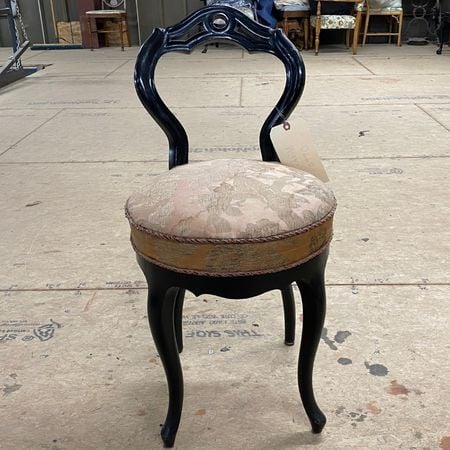
Above, Left: A balloon-back chair from the Victorian era.
Why Does Victorian-Era Furniture Include So Many Different Styles?
During the Victorian era, furniture design changed dramatically due to several factors. 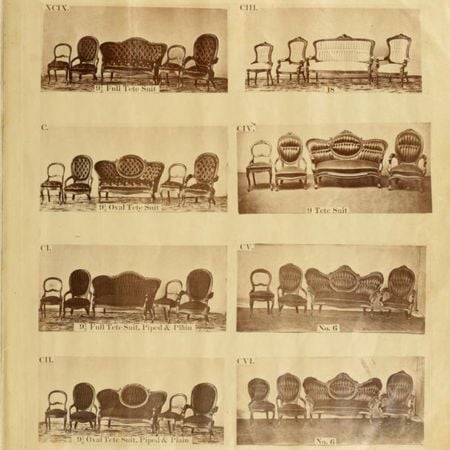
First, industrial manufacturing expanded and it became possible to mass produce increasingly detailed furniture designs in (comparatively) enormous quantities.
Consumers were no longer limited to a small amount of utilitarian, locally hand-made furniture. They could explore more detailed designs that were formerly available only to wealthier buyers.
At the same time, the middle class expanded and homeowners had more disposable income to invest in furnishing their homes. So, not only were they able to buy ornately designed furniture, they could buy more furniture than previous generations had owned.
Additionally, increased travel (and colonization) made new materials available to American and European consumers. New wood species became widely available and included fine exotic woods as well as humbler, more affordable varieties.
These influences allowed new designs to flourish and permitted modern furniture buyers to enjoy formerly out-of-reach historic styles.
Above: An 1870 F. M. Holmes Furniture Company catalog offered a wide selection of furniture sets in several styles.
How Can You Identify Victorian Furniture?
Victorian-era furniture can often be identified by several characteristics common to nineteenth-century construction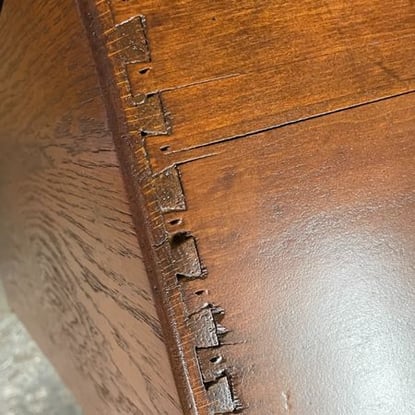 and design.
Victorian characteristics generally include any of the following:
-
solid wood construction
-
carved ornamentation
-
traditional joinery such as mortise-and-tenon, dovetail, etc.
-
darker wood finishes such as walnut, rosewood, or oak
However, Victorian furniture spans 64 years and includes many different design styles. To identify a piece’s style, you must examine both its construction and stylistic details.
Above: An example of a traditional dovetail joint on an antique drawer.
What Are the Most Common Styles of Victorian Furniture?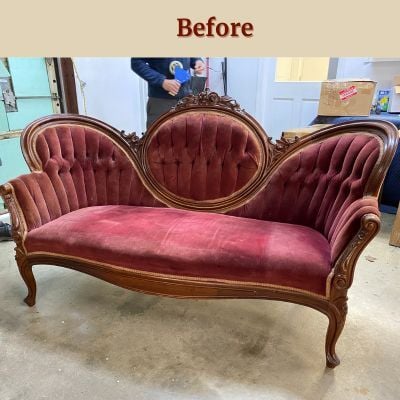
Rococo Revival Furniture
Rococo Revival furniture was popular primarily between the 1840s-1870s and is known for its elaborate carvings and dramatic curves. It sought to recreate French Rococo design of the 18th century.
The original Rococo was a reaction to Baroque style, which was imposing and oversized.
Rococo was still highly detailed and shared many characteristics with Baroque design, but Rococo furniture and architecture featured smaller-scale, curvilinear features.
Typical Rococo Revival features include:
-
Curved silhouettes, as seen on on bombe chests, chair stiles, and cabriole chair legs
-
Slim legs on tables, chairs, etc.
-
C- and S- scroll ornamentation
-
Small decorative crests and floral garlands
-
Walnut or rosewood construction
These pieces were designed to convey luxury and status, often appearing in parlors and formal sitting rooms.
Is Rococo Revival Victorian furniture valuable?
Prices vary widely, depending on the maker, construction, etc, but complete Rococo Revival parlor sets are highly prized among collectors.
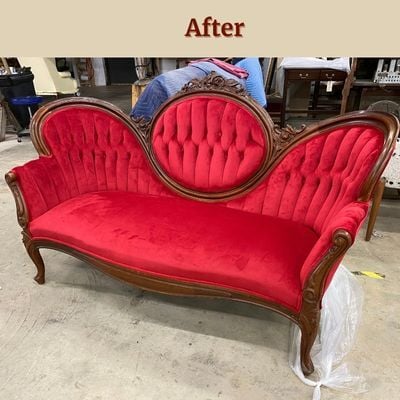
Above: A Rococo Revival settee, before and after refinishing and reupholstery.
Gothic Revival Furniture 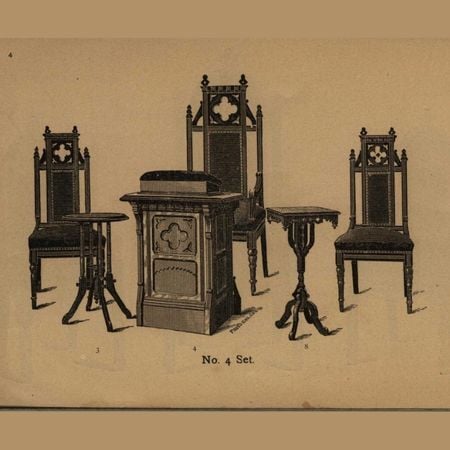
Gothic Revival architecture emerged in the mid-1700s, but exploded in popularity the next century.
By the mid 1800s, Gothic revival furniture design was highly popular and would remain so for the remainder of the Victorian era.
Common Gothic Revival characteristics include:
-
heavy, vertical proportions
-
pointed arches (aka “lancet arches”)
-
trefoil or quatrefoil patterns
-
carved tracery (complex, interlacing designs)
-
dark finishes on woods such as oak or walnut
-
detailed and/or heavy fabrics such as leather, velvet, or brocade
-
decorative nail heads
The Gothic Revival style, with its origins in religious medieval architecture, was a fundamentally conservative stylistic movement.
It emphasized tradition and establishment.
This somber style was especially popular in libraries, dining rooms, and religious buildings.
Although furniture was being mass produced, Gothic-Revival furniture tended to be more expensive. Its more detailed elements still required some hand-crafting, which translated into a somewhat higher cost.
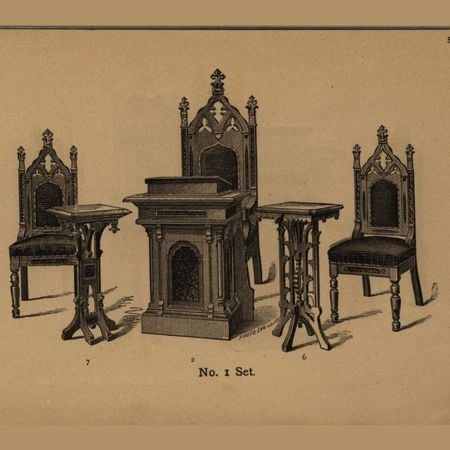
Above: Available designs from an 1887 copy of Baxter C. Swan's Illustrated Catalogue of Church Furniture
Eastlake Furniture
Eastlake furniture emerged later in the Victorian period and was influenced by the design ideas of the architect 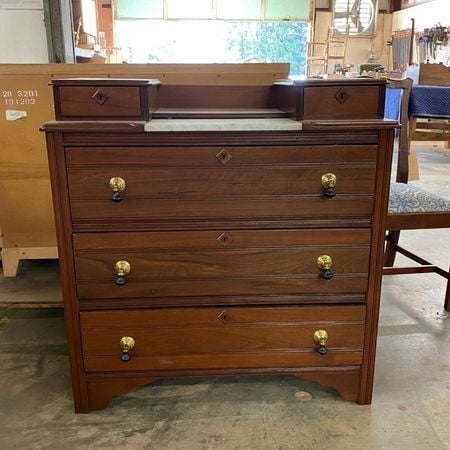 Charles Eastlake.
Compared to some earlier Victorian styles, Eastlake furniture is more restrained.
Eastlake style typically features:
-
geometric carvings
-
Incised lines (lightly carved) rather than deep carving
-
turned spindles
-
rectilinear shapes
-
woods such as oak, cherry, rosewood, and walnut
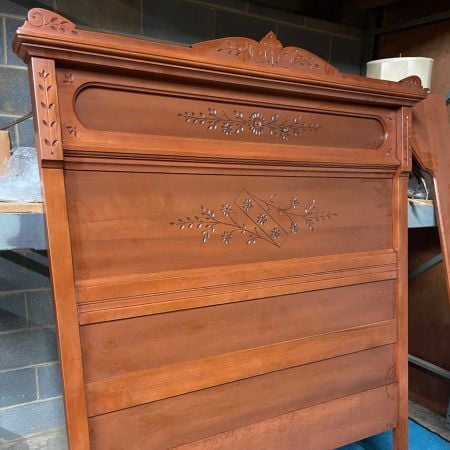 Charles Eastlake emphasized the use of simpler designs and carvings that were inspired by traditional woodworking.
Eastlake urged against using stains and colored varnishes to obscure the wood’s natural color and championed carving decorative elements into the piece itself, rather than creating them separately and gluing or tacking them on.
Industrial manufacturers saw an opportunity to exploit the popularity of Eastlake style and turned to mass-production.
They applied stains and colored waxes to make inexpensive woods appear expensive, experimented with machine carvings, and created machine-made moldings and elements which they would attach to the furniture later on.
Charles Eastlake was unhappy with the industrialization of the style, but the public was delighted to buy this increasingly affordable furniture.
Is Eastlake antique furniture worth money? 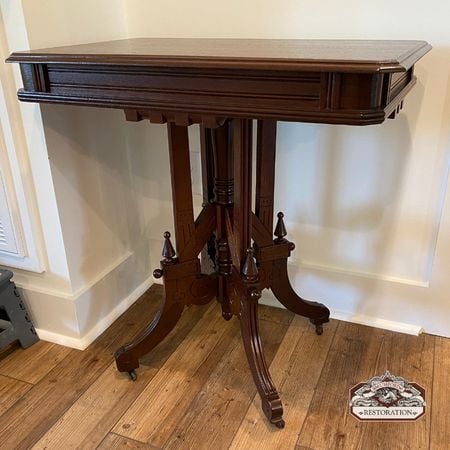
Most Eastlake furniture in antique stores and estate sales is not “worth” very much money.
Eastlake furniture was widely produced in American factories and remains one of the most common forms of Victorian furniture encountered today. Its easily machinable parts meant that Eastlake furniture could be produced at a comparatively low price point.
However, high-end Eastlake furniture with hand-made details is still highly valuable. Some of the most desirable Eastlake antiques were produced by George Jakob Hunzinger, Herter Brothers, and Jacques & Hay.
Queen Anne Revival Furniture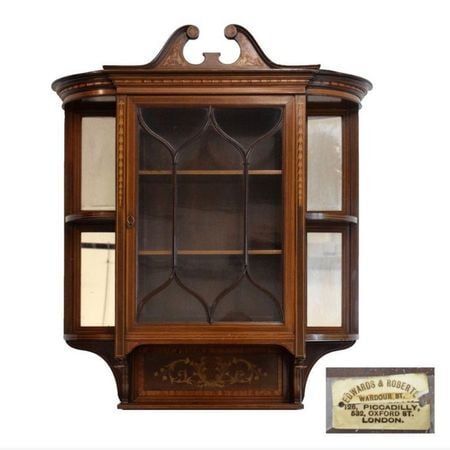
Queen Anne Revival furniture became popular beginning in the 1870s.
Furniture designers sought to recreate the high quality, artisanal woodworking techniques common during the reign of Queen Anne in the early eighteenth century.
Queen Anne Revival pieces were generally lighter and simpler than earlier Victorian furniture styles.
Rather than heavy carvings and elaborate ornamentation, these pieces emphasized smaller proportions and more restrained details.
Common characteristics include: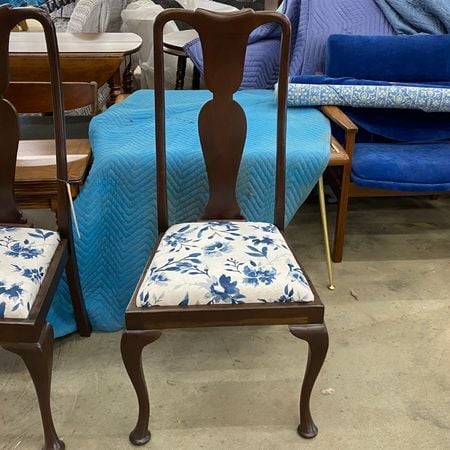
-
cabriole legs
-
pad or slipper feet
-
curved chair backs
-
walnut or mahogany construction
-
fan or shell carvings
Many parlor chairs, occasional tables, and small cabinets from the late nineteenth century reflect this style and it remained popular throughout the 20th century (and even today!).
Queen Anne Revival's continued popularity does cause some confusion, however. Its traditional design can lead furniture owners to believe that their piece is older than it truly is. They are disappointed to discover that their "Victorian" Queen Anne Revival vanity set is actually a 1950s reproduction.
How Much is Queen Anne Revival Furniture Worth?
Queen Anne Revival furniture was produced in relatively large quantities, so its market value today varies widely depending on craftsmanship, condition, and the maker.
Victorian-era pieces from Edwards & Roberts tend to perform well in auctions and sales.
Although 20th century version of Queen Anne Revival are not true antiques, they can still be valuable if they were produced by respected manufacturers such as Henkel Harris or Hickory.
Top Photo: This English-made Victorian-era Queen Anne Revival wall cabinet is selling for $5,000 as of March 2026.
Bottom Photo: Queen Ann Revival furniture is still being produced today. You may need an antique expert to tell you whether you have a true Victorian piece of a modern reproduction.
Arts and Crafts, Craftsman, and Mission Furniture
These three terms are often used interchangeably and are extremely similar in style.
Arts and Crafts (English)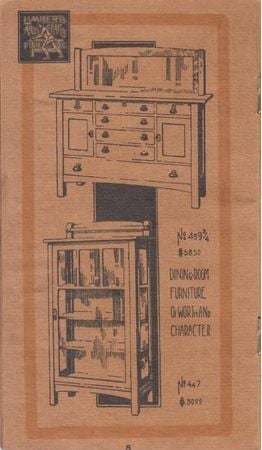
The Arts and Crafts movement, like Eastlake design (as first envisioned, at least), was created in England and emerged as a reaction to the more ornate designs common to cheaper, mass produced furniture of the Victorian era.
The movement rejected mass-produced ornamentation in favor of simplicity and craftsmanship.
Arts and Crafts furniture and its offshoot styles remain popular today because their clean, minimalist lines feel unusually modern.
The Arts and Crafts Movement intended for carpenters and woodworkers to design and build furniture in their own single-craftsperson workshops and sell them to middle-class clientele.
Before long, businessmen were hiring multiple craftspeople to design this popular new furniture style. 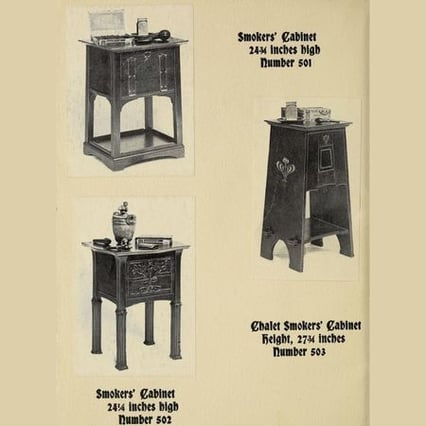
They streamlined and refined the production until Arts and Crafts inspired furniture was, contrary to the movement’s principles, being mass produced.
Furniture from this movement often includes:
-
straight lines
-
exposed joinery
-
solid oak construction
-
minimal decoration
-
sturdy, functional design
Top Photo: A page from a 1910 edition of Limberts Holland Dutch Arts and Crafts Furniture, Booklet No. 104
Bottom Photo: a page from the 1901 catalog New furniture from the work shop of Gustav Stickley, cabinet maker
Craftsman (American Arts and Crafts) 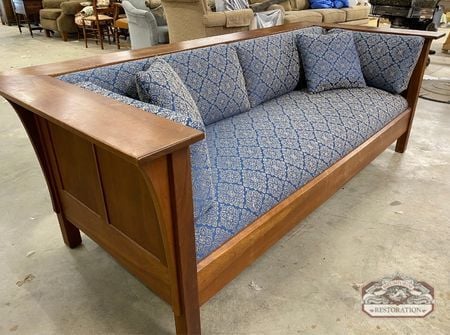
Craftsman style furniture is the American offshoot of the Arts and Crafts movement. American furniture
designer and manufacturer Gustav Stickley visited England and admired the construction and simplicity of the Arts and Crafts furniture being made in small, local workshops.
However, he felt that the wood was too insubstantial and that the designs were still too ornate. He felt that this new style of furniture should be simpler and more angular. He was also critical of the size of English Arts and Crafts furniture. He maintained that this furniture should be both larger and heavier to suggest a feeling of sturdiness.
By the end of 1900, Stickley was collaborating with other furniture designers to produce his own interpretation of Arts and Crafts furniture. He initially called this new line “The New Furniture” but later coined the term “Craftsman furniture” to describe this style.
Collectors today especially prize craftsman furniture produced by Gustav Stickley (Craftsman Workshops), Charles Rohlfs, Greene & Greene, L. & J.G. Stickley, The Roycroft Shops, and Charles Limbert.
Above: A Stickley-style sofa that Mumford Restoration recently reupholstered.
Mission 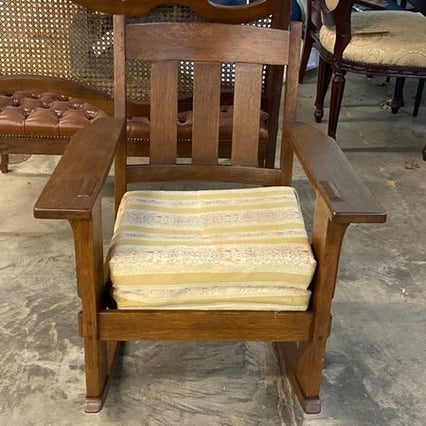
Mission style furniture design is similar to furniture the Spanish used during their colonization of Mexico and the American Southwest.
Like English and American Arts and Crafts furniture, Mission furniture features simple silhouettes, flat panels, minimal ornamentation, and highly functional design.
Mission style furniture’s flat panels and straight lines are deemed more austere than Craftsman furniture, but it tends to be both lighter and smaller.
Right: A Mission-style rocking chair, recently refinished and awaiting fresh upholstery
How Valuable Is Victorian Furniture Today?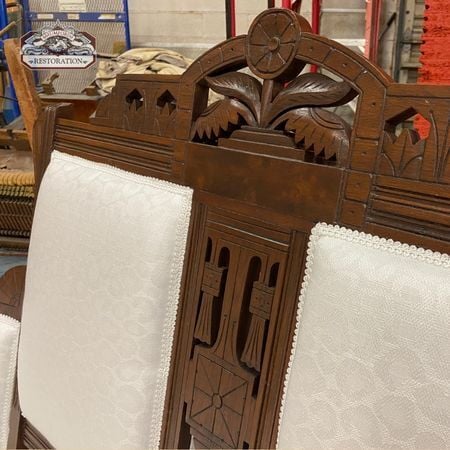
Many people assume that Victorian furniture must be highly valuable simply because it is both beautiful and old. In reality, the market value of Victorian furniture varies widely depending on the style, maker, condition, and rarity of the piece.
Mass-produced Victorian furniture (such as common Eastlake pieces) often sells for relatively modest prices in today’s market. The ornate decoration that appealed to nineteenth-century buyers does not always translate into modern interior design preferences.
However, certain Victorian styles remain more popular, particularly those associated with the Arts and Crafts movement. Their simpler silhouette and minimal ornamentation fit well with contemporary homes.
As with any antique, provenance, craftsmanship, and condition all play important roles in determining value.
Above: Details of a Victorian Eastlake style settee.
Should Victorian Furniture Be Restored?
Restoration decisions should be made carefully and with consideration for the historical integrity of the piece as well 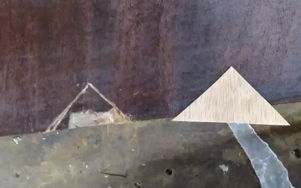 as your own goals.
Consult a reputable appraiser if you suspect your Victorian-era furniture may be valuable. They will be able to advise whether you should restore or simply preserve the piece. Be careful, as unnecessary refinishing can remove original finishes and reduce historical character.
Generally, Victorian furniture pieces can benefit from repairs such as: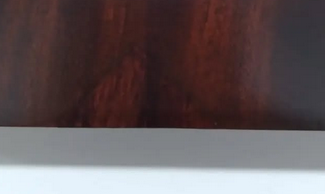
-
Cleaning and regluing loose joints
-
repairing missing or loose veneer
-
replacing worn upholstery
If you are restoring a Victorian-era piece in the hopes of reselling it, the cost of restoration may exceed the relatively modest resale price.
For historically significant pieces or furniture with sentimental value, professional restoration or preservation can help maintain both appearance, character, and usability.
We recommend contacting a professional antique restorer to hear all of your options. They will help you make the most informed decision for your piece.
Above: An example of how experts replace areas of damaged veneer and carefully blend the repairs in.
Victorian Furniture Restoration and Preservation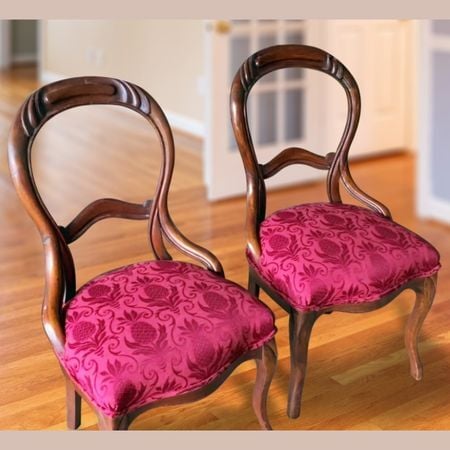
Victorian furniture reflects the changing tastes and technologies of the nineteenth century. These pieces demonstrate how dynamic the 19th century was for furniture design!
At Mumford Restoration in Raleigh, NC, our craftsmen regularly evaluate and restore Victorian-era furniture.
We help owners preserve heirlooms while respecting the original materials and construction of each piece.
If you have Victorian furniture that needs repair, restoration, or professional evaluation, contact Mumford Restoration to discuss your piece.
You can call us at 919-510-6310 or click the button below to submit photos and request an evaluation