

By Stephanie Clough
Jun 23, 2026
Your antique cabinet doors slowly swing back open after you close them.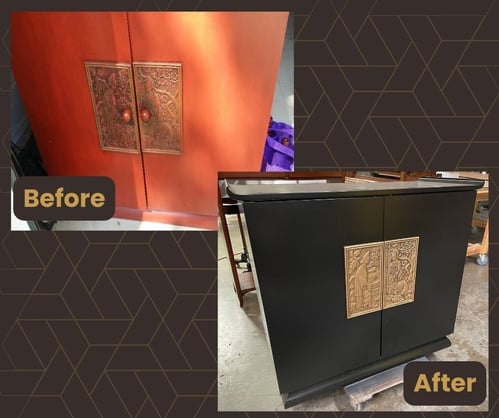
Or maybe you have to pull the doors hard to open them!
What happened? They worked perfectly when you brought the cabinet home!
These two common problems are two sides of the same coin.
Furniture door issues present in any of a variety of ways :
-
catch or bind along the frame
-
appear uneven or misaligned
-
swing open instead of staying closed
-
require force to open or shut
The issue results from long-term structural changes within the furniture.
Sometimes, these issues spring from humidity or temperature fluctuations.
Other times, the problem originated before the furniture was even assembled!
Mumford Restoration has repaired many cabinets whose doors either refuse to shut or open. This is an issue in both antique and modern furniture.
The key to addressing the problem is understanding what kind of furniture you have. That will tell you where the problem lies.
You’ll be able to avoid the wrong “fix,” which could permanently damage the piece.
Why Won’t My Antique Cabinet Doors Close?
Cabinet doors often resist closing or staying closed because of the materials they are made from and/or the 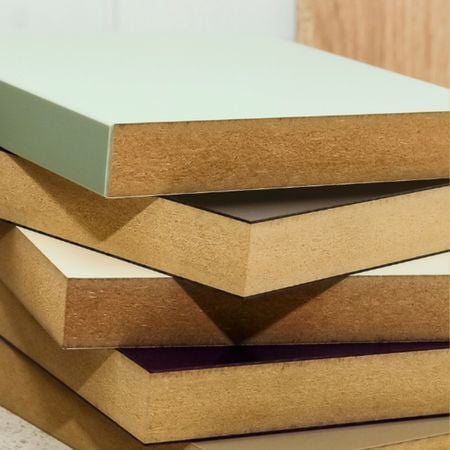 environment in which the furniture is kept.
Bernard Mumford recommends that clients ask themselves three questions.
1. Is my furniture made from solid wood or is it veneer over a Medium-Density-Fiberboard (MDF) substrate?
2. What kind of wood is my furniture made from and where was my furniture made?
3. What is the humidity level in my home?
Modern Furniture
Many pieces of modern furniture are often made of either:
-
MDF
-
badly kiln-dried gumwood
MDF swells when exposed to water and even high humidity. Since MDF is essentially wood chips glued together, if water or heat affect the glue, the wood fibers separate and the material begins to break down.
Even being made of wood does not guarantee that a piece of wood will perform well. Many modern furniture producers use gumwood.
While gumwood is not inherently bad, these furniture producers rush the steps intended to make the wood stable.
They may not properly season (air-dry) the wood before they begin the kiln drying process.
Additionally, they often do not kiln dry the wood long enough. Kiln drying reduces the wood’s moisture content and prevents future shrinking and warpage.
Rushing these two steps produces wood that is very reactive to temperature and humidity.
Photo Above: An example of medium-density fiberboard (MDF).
Antique Furniture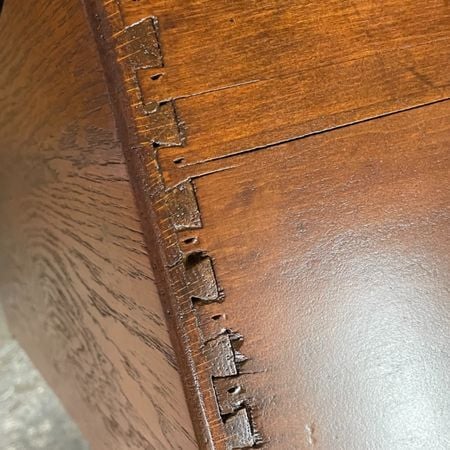
Antique furniture was built using:
-
solid wood construction
-
traditional joinery
Since antique furniture tends to use good-quality wood and well fitted joints, it responds differently than modern furniture which is often made of MDF or gumwood.
These historic materials and methods are durable, but they are also dynamic. Remember, furniture is a system. All of the parts work together to support the entire piece. Over time, even small changes in humidity and temperature can affect how a door fits within its opening.
Photo Above: An example of dovetail joints, a traditional joinery style.
Can Antique Furniture Doors Become Misaligned Over Time?
Yes, antique furniture doors can become misaligned over time, no matter how well made the piece is.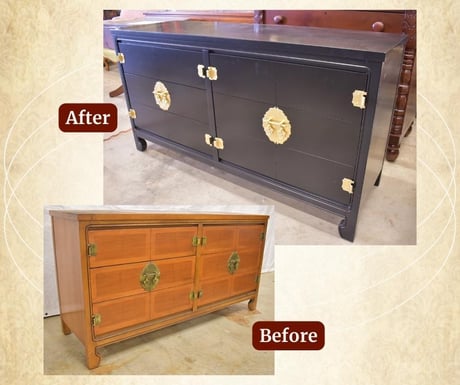
Even in stable environments, antique furniture gradually changes due to:
-
wear at contact points
-
repeated use
-
natural aging of materials, such as hide glue
These changes can cause the door to:
-
shift slightly out of square
-
sit unevenly within the opening
-
bind against the frame
Because doors are precisely fitted components, even small changes can affect how they open and close.
Can I Fix My Cabinet Doors Myself?
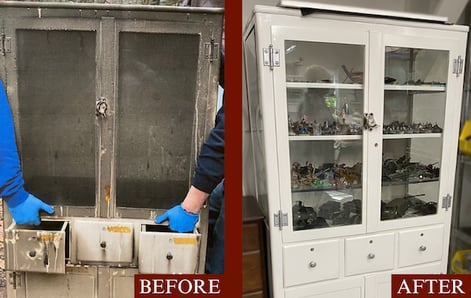
Occasionally, you can indeed make a simple repair.
Bernard Mumford notes, “Often, a door won’t stay shut because it's warped. One door sticks out farther than the other and they won’t close. Or the lock no longer reaches the lock because of the warping.”
He recommends trying one of these simple fixes for each issue
-
For Single Doors: Add a magnetic catch. You might still have to continue pushing the door in to help the magnet grab it.
-
For Double Doors: Add a latch at the bottom of one door and a magnet on top of the other door. One remains tight because of the latch while the other remains in place due to the magnet.
However, these are Band-Aids that will not correct the underlying structural issues. As the issues progress, the magnetic catch may eventually fail to keep the doors closed. A professional restorer can correct your furniture's structural issues and find a lasting solution.
Do Hinges Cause Antique Doors to Stop Closing Properly?
Sometimes, issues related to the hinges can cause antique doors to stop closing properly.
Hinges can contribute to the problem if they:
-
become loose
-
wear unevenly
-
shift out of alignment over time
Can I Repair the Hinges Myself?
It is possible to make DIY repairs on hinges, but it really depends on the complexity of the repair.
Hinge Wear
Sometimes parts of the hinge can wear out due to usage.
Modern hinges come in fairly common sizes and can easily be replaced.
In the case of hinges on rare or historic furniture, you may need a professional antique restorer who can find or make replacement parts.
Screw Failure
If the screws in the hinge are loose, do you notice that they continually spin without tightening when you attempt to screw them back in? That means that the hole they are meant to screw into has been stripped. You have 3 options.
Option 1
Use a slightly larger screw than the original to re-secure the hinge. This is the most beginner-friendly option.
Option 2
Insert toothpicks around the existing screw to prevent it from moving.
We strongly recommend contacting a restorer if options 1 and 2 do not work.
In more severe issues, such as cracked wood, an entire section of wood under the hinge may have to be removed and replaced with new wood.
Should You Sand a Door That Won’t Close?
In most cases, no, you should avoid sanding doors that will not close. 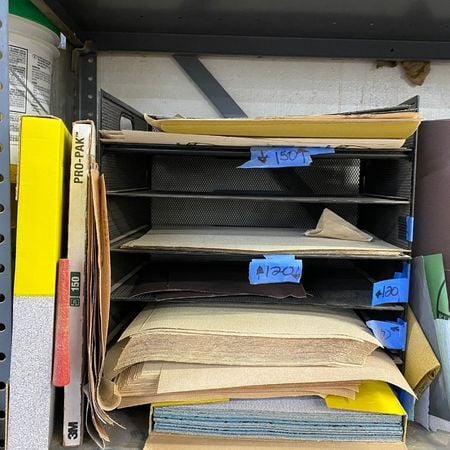
Thanks to its simplicity, sanding is a tempting DIY “solution.”
Unfortunately, many DIY-ers sand before they understand why their doors will not close properly. This premature repair tends to only cause more issues.
Sanding can:
-
remove original material
-
create gaps around the door
-
alter the fit permanently
Sanding does not solve structural and alignment-related problems.
Often, a furniture owner will sand their malfunctioning doors, only to find that it made no difference at all.
They eventually bring their furniture to a restorer who repairs the structural issue, but the doors are now missing significant material from the DIY repair and look uneven.
Why Do DIY Fixes Often Make Door Problems Worse?
Many DIY approaches focus on the symptom rather than the cause.
These methods can:
-
damage or even destroy original materials
-
worsen misalignment
-
make future repairs more complex
Antique furniture's parts work together as a system. Changing one element without understanding the whole can create new problems.
When Should You Call a Furniture Restoration Professional?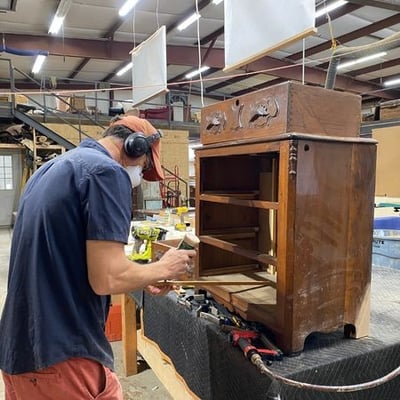
Professional evaluation is recommended when:
-
simple DIY fixes have failed
-
the problem is getting worse over time
-
the door appears increasingly misaligned or unstable
-
the furniture is valuable or sentimental
Early evaluation can prevent minor issues from becoming more complex structural repairs.
Professional Antique Furniture Repair in Raleigh, NC
At Mumford Restoration in Raleigh, NC, we regularly repair antique furniture with doors that are misaligned, binding, or no longer closing properly.
Our approach focuses on:
-
preserving original construction
-
correcting alignment issues
-
restoring proper function without unnecessary alteration
If your antique furniture doors are not closing properly, professional evaluation can help identify the cause and prevent further damage.
Call us at 919-510-6310 or submit photos through our online form to discuss your piece.