

By Stephanie Clough
Jun 02, 2026
Does the surface of your antique furniture look wavy, raised, or uneven? You're probably seeing veneer that is 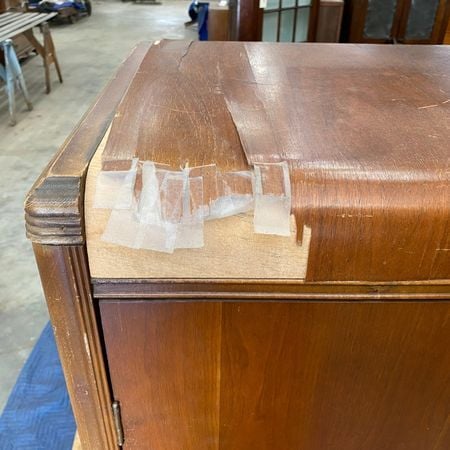 "delaminating," or beginning to lift or separate from the wood below.
This issue may appear as:
-
bubbles or blisters under the surface
-
edges that are curling or lifting
-
loose sections that move when pressed
-
rippling or uneven texture
Veneer damage is a common issue for antique furniture.
Many people assume lifting veneer is purely cosmetic and simply attempt to glue it back themselves.
Unfortunately, the veneer will likely continue lifting in other areas.
That’s because lifting veneer often signals changes in the underlying materials and adhesives that require careful evaluation by a reputable antique restorer like Mumford Restoration.
Photo Above: The veneer lifted off of this Art Deco waterfall chifferobe and was unfortunately lost over the years. If you keep veeneer that has fallen off, a restorer may be able to glue the pieces back.
Why Does Veneer Lift or Bubble on Antique Furniture?
Veneer lifts when the bond between the thin wood veneer and its substrate (the less expensive wood that the veneer is glued to) begins to fail.
Antique furniture typically used hide glue, a traditional adhesive that: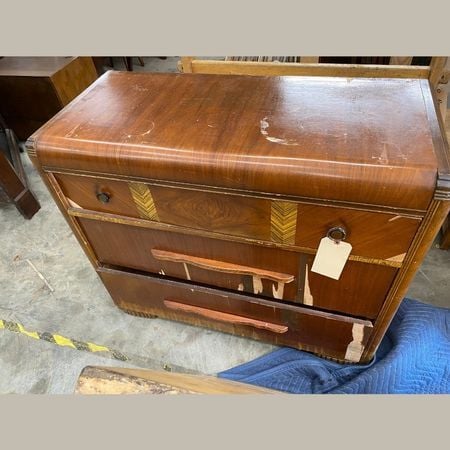
-
is strong but reversible
-
responds to moisture and temperature over time
-
naturally degrades after decades
As this adhesive ages, it can lose its ability to hold the veneer tightly in place.
When that bond weakens, the veneer may:
-
detach slightly from the surface
-
form bubbles or ripples
-
lift at edges or seams
This process often happens gradually and may not be immediately noticeable.
Photo Above: This small Art Deco chest of drawers, part of the same set as the chifferobe, is missing veneer. Again, always keep any pieces of veneer that come off.
Why Does Veneer Come Unglued?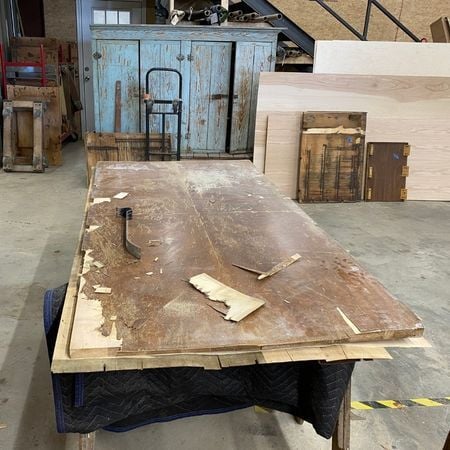
Veneer failure is usually caused by a combination of factors rather than a single event.
Common causes include:
-
natural aging of hide glue
-
long-term environmental stress
-
previous improper repairs
-
repeated expansion and contraction of wood
Even in cases where the glue is still within its natural lifespan, the substrate (the less wood that the veneer is glued to) may be under environmental stress. 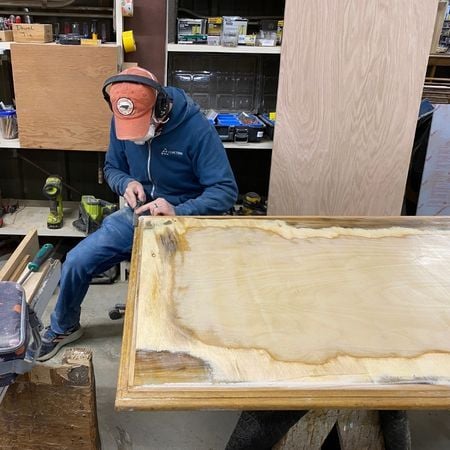
Have you left your furniture near a vent, where it is exposed to a flow of cold air in summer and warm air in winter?
Is your veneered antique furniture in front of a window that doesn’t have a curtain or protective window film?
Has your furniture been exposed to water or high humidity, either from a flood or being near a laundry room, bathroom, or other humid area?
Keep in mind that these kinds of heat, humidity, and environmental fluctuations can:
-
Reactivate hide glue and allow the veneer to loosen and move
-
Cause the veneer and substrate to expand and contract. This repeated movement, even if it is slight, can still create stress and break the bond between the glue and the veneer.
Eventually, that stress becomes stronger than the glue bond, and the veneer begins to separate.
Photo Above: This antique desk's veneer was in very poor condition and unfortunately could not be saved. Mumford Restoration had to carefully remove all of the remaining veneer and ensure that the surface was clean and even. Take a look at the before and after photos at the bottom of this article!
Is Lifting Veneer a Sign of Serious Damage?
Lifting veneer can be a sign of more complex, underlying issues.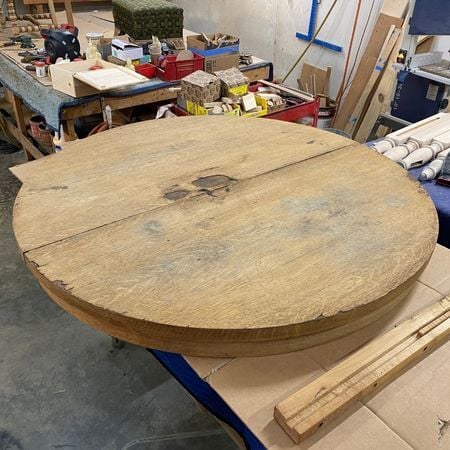
In early stages, veneer lifting may be limited to small, localized areas. However, if left untreated, it can lead to:
-
larger sections separating
-
cracking or breaking of the veneer
-
loss of original material
Because veneer is thin and often fragile, damage can escalate quickly once the bond begins to fail.
Early evaluation can prevent minor lifting from becoming a more extensive repair.
Photo Above: This oak dining table's veneer was so damaged and degraded that it had to be completely replaced.
Can Lifting Veneer Be Repaired?
Yes, veneer can sometimes be repaired if the damage is not too extensive. 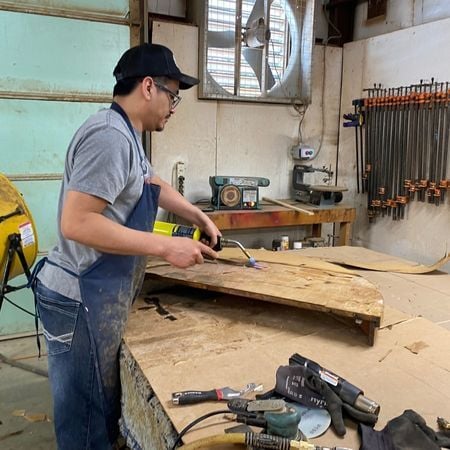
The appropriate treatment depends on the age, condition, and rarity of the veneer.
A restoration specialist may:
-
reattach the original veneer if it is intact
-
stabilize loose areas before they worsen
-
flatten and secure bubbled sections
-
replace missing or severely damaged veneer
The goal is always to preserve as much original material as possible while restoring a stable surface.
Our restorer used heat to break the bond between the veneer and the underlying surface. This allowed him to nearly remove the veneer without damaging the underlying wood with sharp tools.
Should You Glue Veneer Back Down Yourself?
In most cases, you should not try to glue veneer back down yourself.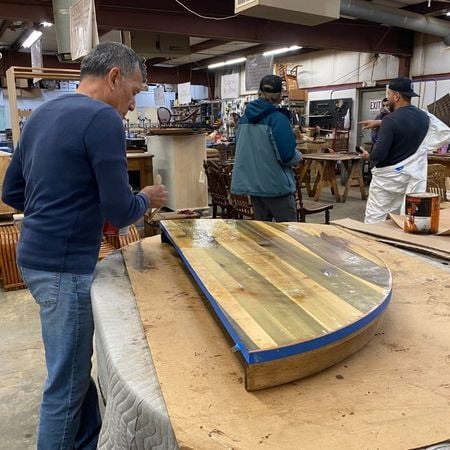
This DIY attempt often ends badly.
Improper repairs might involve:
-
using inappropriate adhesives
-
applying glue without fully cleaning and preparing the surface
-
clamping unevenly or with too much pressure
These approaches can:
-
trap debris or old adhesive beneath the veneer
-
create uneven surfaces
-
damage surrounding wood
-
make future professional repair more difficult
Antique veneer work requires careful preparation, appropriate adhesives, and controlled pressure.
Photo Above: After we removed the original veneer, our restorers prepared the clean underlying wood for fresh veneer.
Why Do DIY Veneer Repairs Often Fail?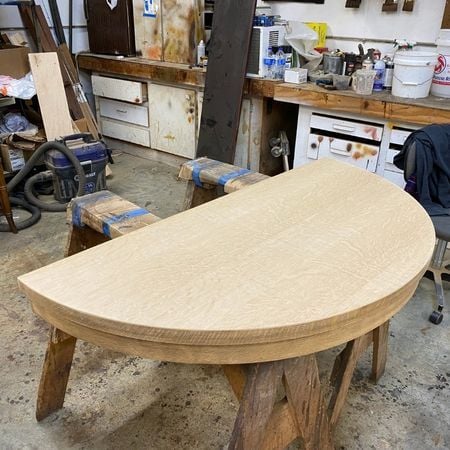
Veneer repair is not simply a matter of “sticking it back down.”
Successful repair depends on:
-
removing old adhesive properly
-
ensuring the veneer sits flat and aligned on a clean surface
-
applying consistent, appropriate pressure
-
using materials compatible with the original style and construction
Without these steps, repairs may:
-
fail quickly
-
sit unevenly
-
fail to integrate with the original style and materials
-
complicate future restoration efforts
Photo Above: The new veneer is well attached, smooth, and ready to be finished in our spray booth!
Can Veneer Be Replaced if It Is Missing or Damaged?
Yes, veneer can generally be replaced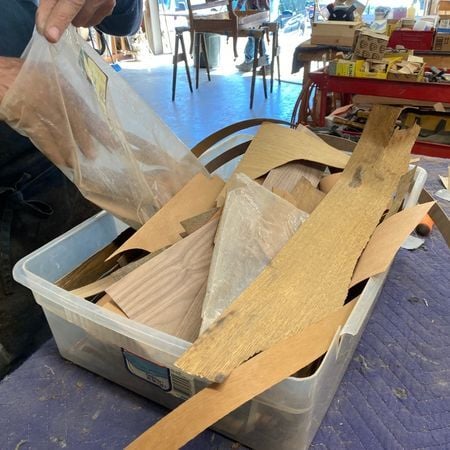
When veneer is too damaged to reuse, a restorer may:
-
source a matching wood species
-
replicate grain pattern and orientation
-
blend the new veneer into the surrounding surface
Poorly matched or improperly installed veneer is often very noticeable.
Unfortunately, badly damaged or missing veneer may not have exact replacements available. Some species of wood either no longer exist or are so endangered that they can no longer be harvested
Sometimes, a restoration specialist may have access to antique veneer from previous projects or salvaged furniture and can substitute this appropriate veneer.
If a similar replacement is not available, a restorer may have to replace a rare veneer with a modern equivalent and then faux-grain to minimize the contrast. This should not be done without consulting a reputable appraiser, as it requires both an awareness of structural and stylistic considerations as well as an artist’s eye for creating faux-grain patterns.
Photo Above: Antique restorers keep a variety of veneers on hand to patch veneer. This includes newly bought veneers from specialty wood supply stores as well as pieces of antique veneer salvaged from previous antique restoration and repair projects.
When Should You Call a Furniture Restoration Professional?
Professional evaluation is recommended when: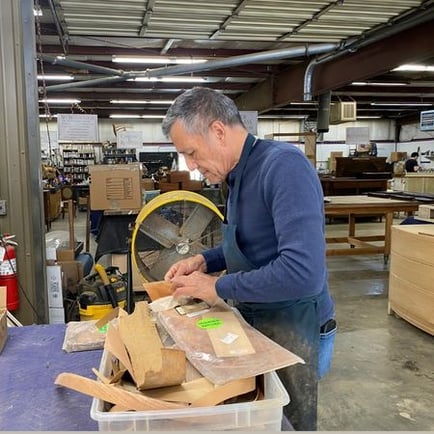
-
veneer is lifting, bubbling, or curling
-
sections feel loose or unstable
-
veneer is cracked or missing
-
the piece is valuable and/or sentimental
A trained restorer can determine whether the veneer can be preserved and re-adhered, or if it requires replacement.
No matter what, they will choose the least invasive and most effective approach.
Photo Above: A member of our expert refinishing team examines our collection of veneer. He is looking for the perfect match to repair an antique settee.
How Can You Prevent Veneer Damage?
While some veneer issues are simply the result of age, proper care can reduce the risk of damage.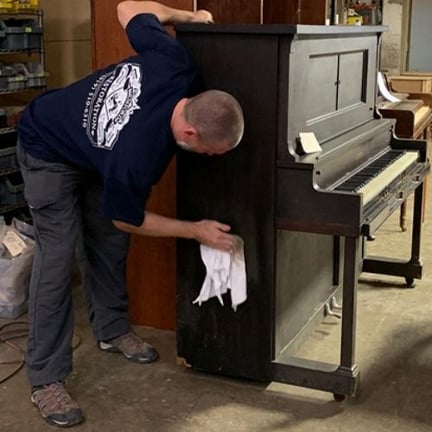
Best practices include:
-
maintaining a stable, moderate environment in terms of light, temperature, and humidity
-
occasionally glancing over your furniture to ensure it is still in good condition
Veneer is durable when properly maintained, but it is less forgiving than solid wood when conditions are unstable.
Photo Above: While dusting your furniture, give it a quick look to ensure that the wood is still in good condition.
Professional Veneer Repair in Raleigh, NC
At Mumford Restoration in Raleigh, NC, we regularly repair and restore antique furniture with lifting, damaged, or 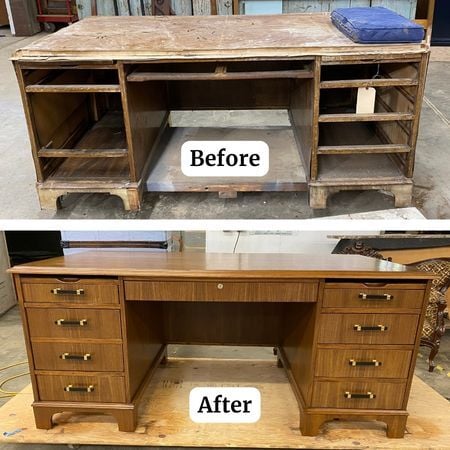 missing veneer.
Our approach focuses on:
-
preserving original veneer whenever possible
-
matching wood species and grain as accurately as possible
-
restoring both stability and appearance
If your antique furniture shows signs of veneer lifting or bubbling, early evaluation can prevent further loss and ensure the piece is treated correctly.
Call us at 919-510-6310 or submit photos through our online form to discuss your piece.